Education and good health care are critical to a successful community. There are many talented people throughout Haiti who, given the chance, can make a significant contribution to the well-being of their country. Sister Cities Essex Haiti is working to support that vision.
Building the Deschapelles Library was the first step. Today, our board includes members from Connecticut, Massachusetts, Colorado, Florida, and Senegal, reflecting the wide reach of people committed to this partnership. Deschapelles can serve as a model of collaboration among providers of health care, education, and cultural opportunities, and between communities in the United States and Deschapelles, Haiti. Each community can grow through understanding another culture and working together for a better world.
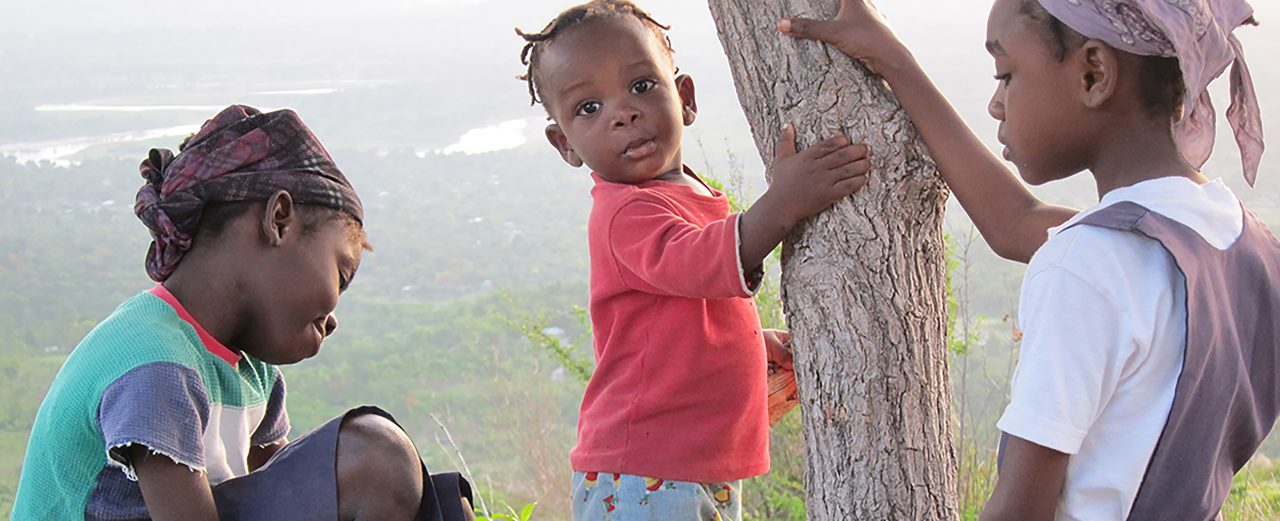
Haiti remains one of the poorest nations in the Western Hemisphere. According to the most recent data: about 60.7 % of Haitians live below the national poverty line, and around 31.6 % live in extreme poverty. The official unemployment rate is around 15.1 % in 2024. The minimum wage in Haiti remains fixed at 540 Haitian gourdes per month (as of early 2025) for many sectors, which translates to significantly less than U.S. $10 per month at current exchange rates. Haiti is the poorest country in the Western Hemisphere, as well as one of the most unequal in wealth distribution.
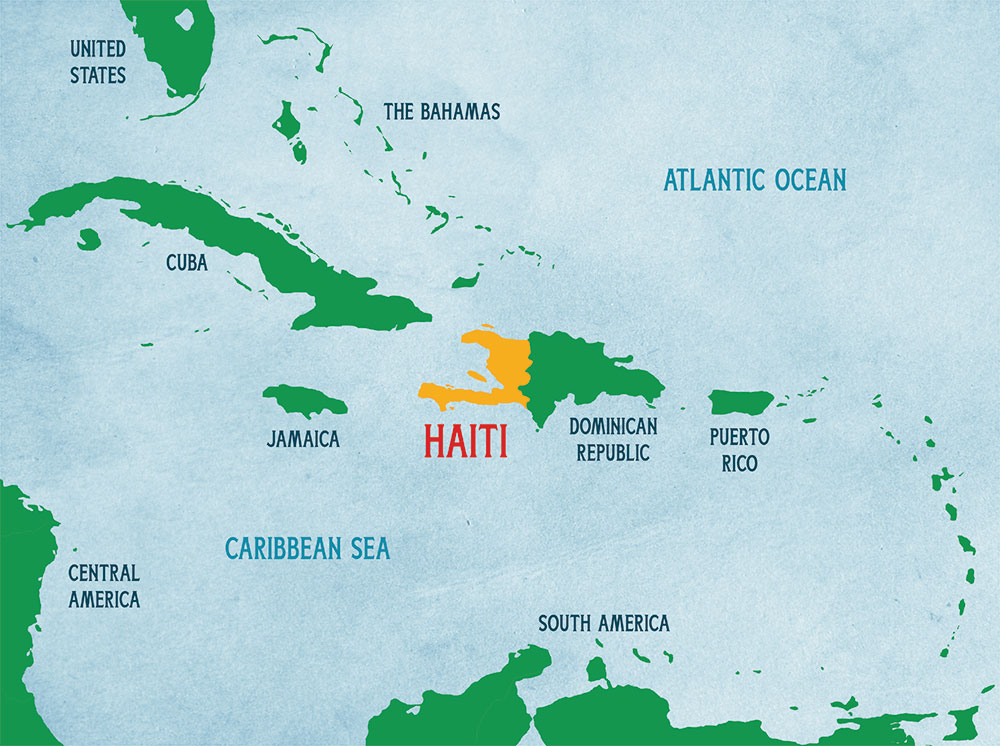
Haiti lies approximately 710 miles from the United States. Haiti lies on the western end of the island of Hispaniola in the Caribbean. The Dominican Republic shares the island to the east.
Deschapelles is located in the Artibonite Valley, about three hours north of the capital city, Port‑au‑Prince.

Creole & French
27,750 sq km / 10,714 square miles
(Slightly smaller than the state of Maryland)
11,753,943 (2024 est.)
Haitian Gourdes (HTG)
Average exchange rate in 2010: 1 US dollar = 32.5325
HTG Average Exchange rate today 1 US dollar = 130.79 HTG
Haiti’s population is widely understood to be about 95% Black and about 5% mixed-race or other.
Most Haitians are of West and Central African descent, the result of the trans-Atlantic slave trade.
Although the indigenous Taíno people were the island’s original inhabitants, they were almost entirely decimated during early colonial rule. Today, Taíno ancestry survives primarily as small genetic traces and cultural influences, rather than as a distinct, continuous ethnic population.
Total population: 68% (2017 est.)
Male: 72.9% (2017 est.)
Female: 63.9% (2017 est.)
$2,800 (2024 est.)
$3,000 (2023 est.)
$3,000 (2022 est.)
Poverty rate: Around 60% of the population lives below the poverty line, defined as living on less than $2.41 per day
Extreme Poverty: Around 30% of the population lives in extreme poverty, on less than $1.23 per day.
Agricultural land: 65.1% (2022 est.)
Forest: 12.4% (2022 est.)
Other: 22.5% (2022 est.)
The country has long been plagued by natural disasters. In 2010, a major 7.0 magnitude earthquake struck Haiti with an epicenter about 25 km (15 mi) west of the capital, Port-au-Prince. An estimated 300,000 people were killed, and some 1.5 million left homeless. The earthquake was assessed as the worst in this region in 200 years. A 7.2 magnitude earthquake hit Haiti’s southern peninsula in 2021, causing well over 2,000 deaths; an estimated 500,000 required emergency humanitarian aid.
About two-thirds of Haitians depend on agriculture, primarily small-scale subsistence farming. However, the land is highly vulnerable to damage from frequent natural disasters and the effects of widespread deforestation. Much of the remaining forested land continues to be cleared for agriculture, and harvested wood is often used as fuel. These practices contribute to severe soil erosion and leave many communities with inadequate supplies of potable water.
Source: CIA Factbook